Gazi Mustafa Kemal Atatürk , the founder of the Republic of Turkey, was not only a leader but also a visionary figure in the field of aesthetics, art and culture.
Even his living spaces, the furnishings he used, and the objects he chose reflect this exquisite taste. One of these details is his special carpet, the most striking piece after his Çankaya Mansion in Istanbul.
In this article, we will explore the story of the carpet from Atatürk's house in Istanbul, the meanings of its motifs, its weaving technique and its place in Turkish carpet art.
We can also link such historically themed content to the “ Anatolian Style Decoration ” and “ Vintage Decoration ” articles with natural internal links.

Atatürk and the Unifying Power of Art
Throughout his life, Atatürk carried out not only political reforms but also cultural transformations.
He took many steps for the development of Turkish art and the preservation and modernization of handicrafts.
-
Supporting hand-woven carpet making in the 1930s,
-
Establishment of institutions such as the Sümerbank Carpet Factory ,
-
The academic study of Turkish motifs was a result of his visionary approach.
💡 In short: Atatürk knew that a carpet was not just a floor covering; it was a symbol of cultural identity .
Special Carpet Found in His Home in Istanbul
Florya Marine Mansion , known as Atatürk's residence in Istanbul, and his private rooms in Dolmabahçe Palace are simply but elegantly decorated.
The carpets used in these spaces reflect both the artistic understanding of the period and Atatürk's simple yet elegant taste.
📍 Features of the Carpet:
-
Handwoven, fine wool and silk blend.
-
The ground color is light beige, the motifs are navy blue, red and gold tones.
-
Traditional Hereke style weaving.
-
In the middle section, there is a symmetrical medallion motif surrounded by leaf and tulip figures.
💡 Detail: This carpet was woven specifically for Atatürk at the Hereke Imperial Factory and was exhibited in his private room in Dolmabahçe Palace.

The Meaning of Motifs and the Spirit of the Period
Each motif is based on deep roots of Turkish culture.
-
Tulip: The symbol of Istanbul and Ottoman elegance.
-
Intricate leaf patterns: Represent nature, renewal and hope.
-
Symmetrical medallion: Symbolizes order, stability and unity.
The patterns of this carpet bear symbolic traces of the search for balance and harmony in the founding years of the Republic.
Hereke Carpet Weaving and Atatürk's Support
Atatürk took steps to revive the Hereke carpet weaving tradition inherited from the Ottomans.
The carpet workshops in Hereke were reorganized in the 1930s, and traditional techniques were blended with modern design.
💬 From the words of Atatürk:
“The art of a nation is the mirror of its level of civilization.”
This approach ensured that carpet art was seen not only as a form of manual labor but also as an expression of national identity .

Atatürk's Understanding of Home Decoration: Elegance in Simplicity
Simplicity, order and functionality were always at the forefront in the spaces where Atatürk lived.
Her private room in Dolmabahçe and her relaxation area in Florya were decorated in a low-key yet characterful manner.
-
Light-colored carpets reflected light and created a sense of spaciousness.
-
The furniture had simple lines.
-
Carpets were one of the most important elements that emphasized the center of the space.
💡 Additional information: Some of the carpets used in the Florya Mansion are Anatolian weavings , a reflection of Atatürk's emphasis on "domestic production".
Technical Specifications of the Carpet
Atatürk's special carpet was woven with the Hereke double knot (Gördes) technique .
-
It has a density of approximately 1 million nodes/m².
-
Material: 80% wool, 20% silk.
-
There are classical Ottoman decorations on the side borders and a symmetrical medallion in the center.
This technique is known for both its durability and richness of detail.
💡 Cultural connection: This technique is still considered the gold standard of Turkish carpet weaving today.
The Cultural and Artistic Importance of the Carpet
Atatürk's carpet is not just a decorative object; it is considered a concrete document of Turkish art history .
-
The fact that it is woven by hand shows the importance it attaches to domestic production.
-
The combination of traditional and modern elements in the motifs reflects the spirit of the Republican era.
-
It is still a source of inspiration for local carpet manufacturers today.
💡 Link suggestion: In this section, you can provide an internal link to the article “ Vintage Decoration: Add Character to Your Home with Antique Pieces ”.
Where Can It Be Seen Today?
Atatürk's special carpet is currently exhibited in the Atatürk Room of Dolmabahçe Palace .
Visitors can see the details of the carpet closely and have the opportunity to feel the artistic understanding of the period.
In addition, the examples in the Hereke Carpet Museum, woven with similar techniques, are living representatives of this tradition.
Inspiration for Today's Interiors
By taking inspiration from Atatürk's carpet, a similar timeless aesthetic can be achieved in modern living spaces.
-
Antique rugs in light beige tones can be combined with modern furniture with classic motifs.
-
Objects with gold details but simple frames can be used.
-
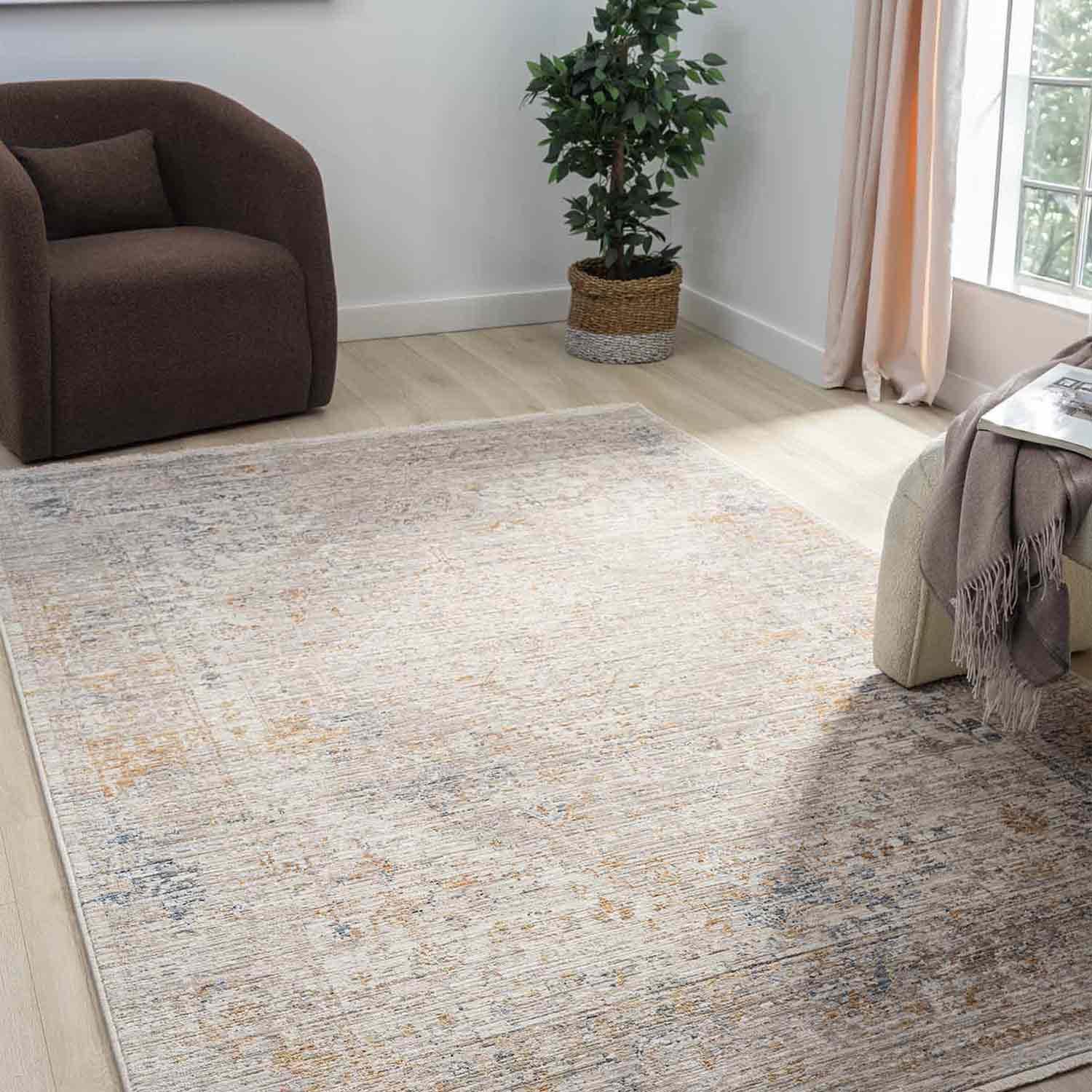
Soft textured rugs that reflect light harmonize with simple decoration.
💡 Product recommendation: Pera Halı's Anatolian Rugs Collection re-presents this historical texture with a contemporary interpretation.
The special carpet in Atatürk's house in Istanbul is not just a work of art; it is a silent representative of Turkish culture, labor and elegance.
His understanding of decoration, with its combination of naturalness, simplicity and meaningful details, continues to inspire today.
Keeping this aesthetic heritage from history alive is both a responsibility and a source of pride for each new generation.